
financial
-
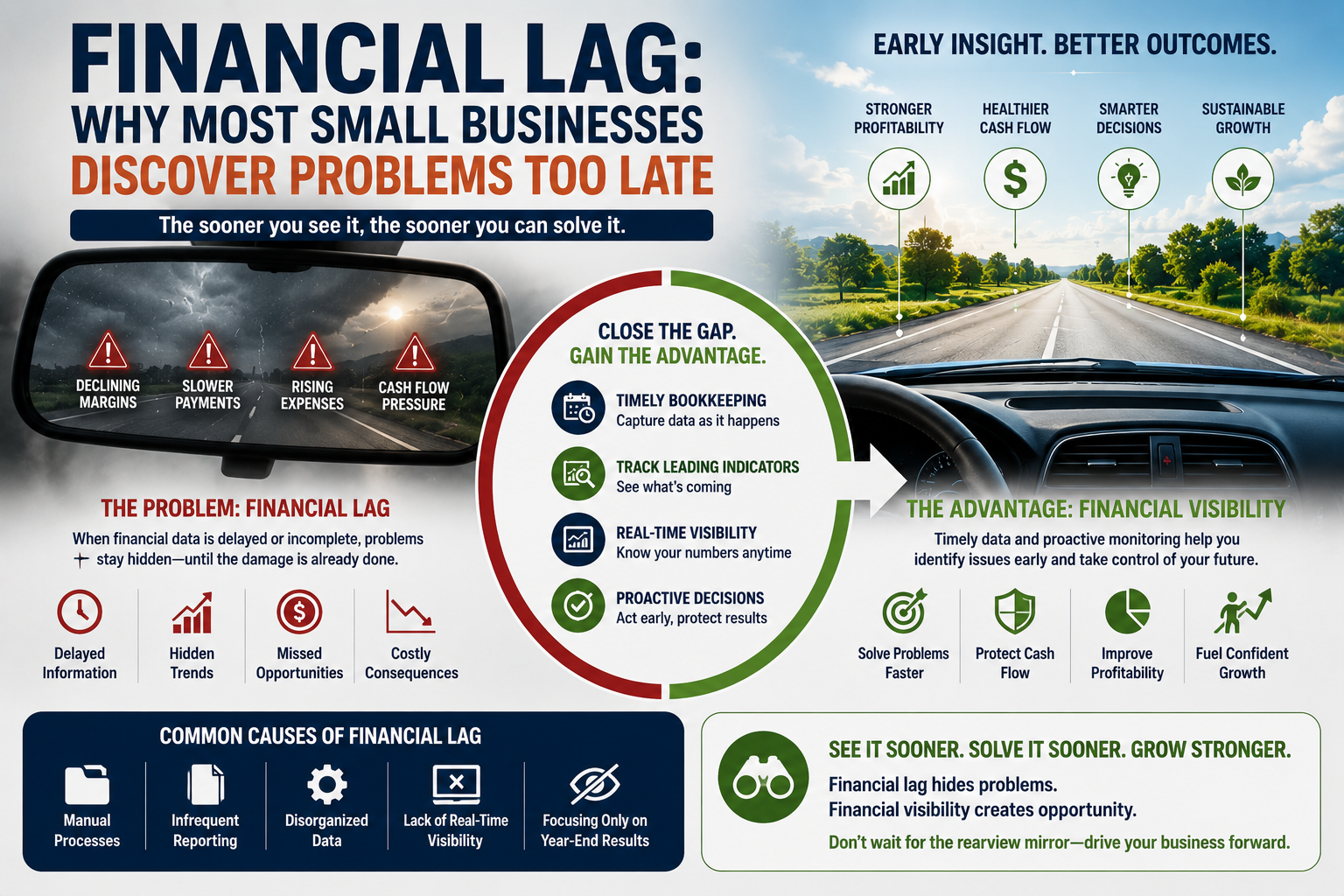
Financial Lag: Why Most Small Businesses Discover Problems Too Late
Most business problems do not appear overnight. Cash flow issues rarely begin with an empty bank account. Profitability problems rarely start with a sudden loss. Operational inefficiencies rarely emerge all at once. Instead, most business challenges develop gradually. Small warning signs appear first. Margins begin shrinking. Expenses creep upward. Customer acquisition costs rise. Collections slow
-
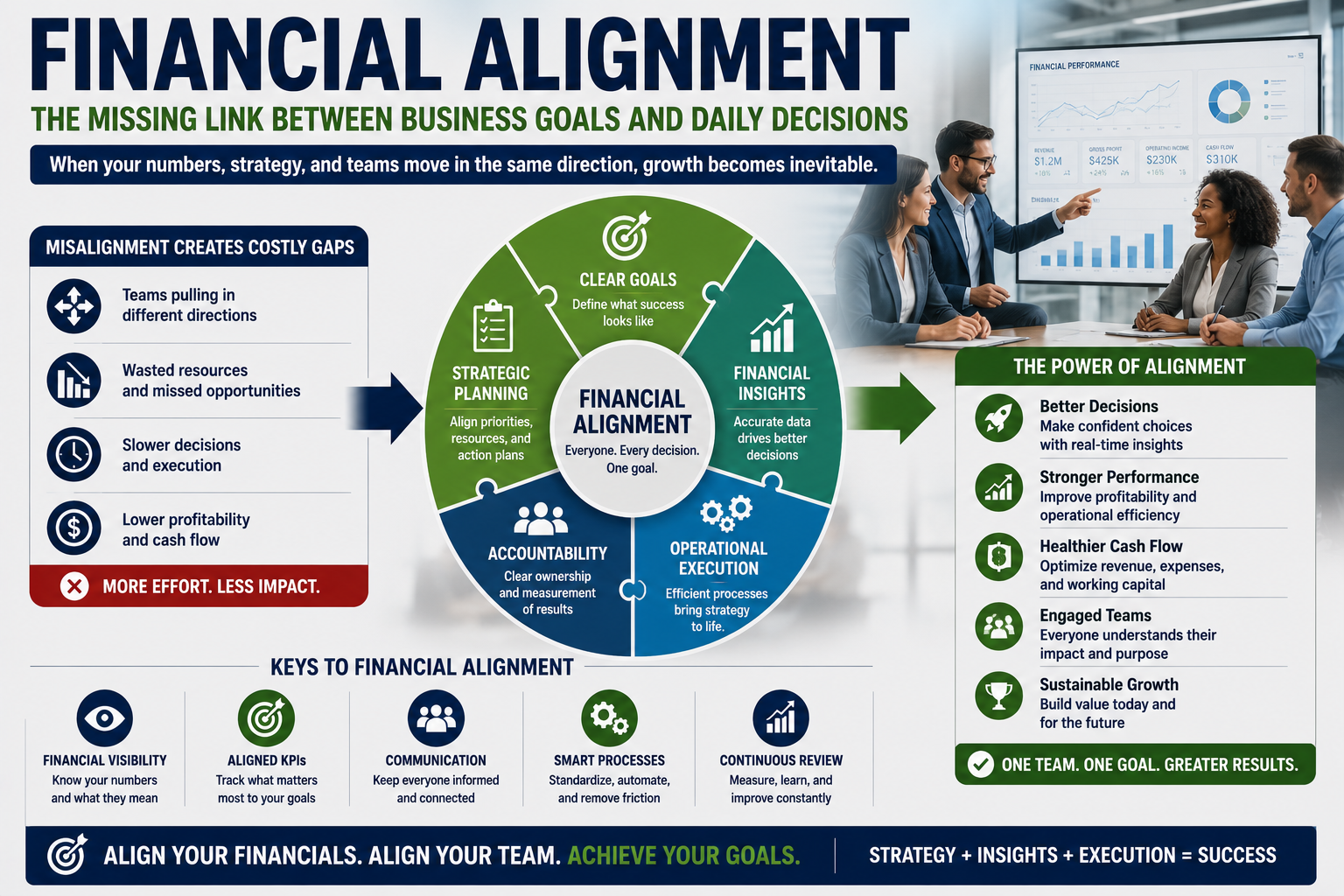
Financial Alignment: The Missing Link Between Business Goals and Daily Decisions
Most small business owners have goals. They want to: The challenge is not setting goals. The challenge is ensuring that daily decisions actually support those goals. This is where many businesses struggle. Leadership creates strategic objectives, but day-to-day operations often move in a different direction. The result is a disconnect between what the business wants
-
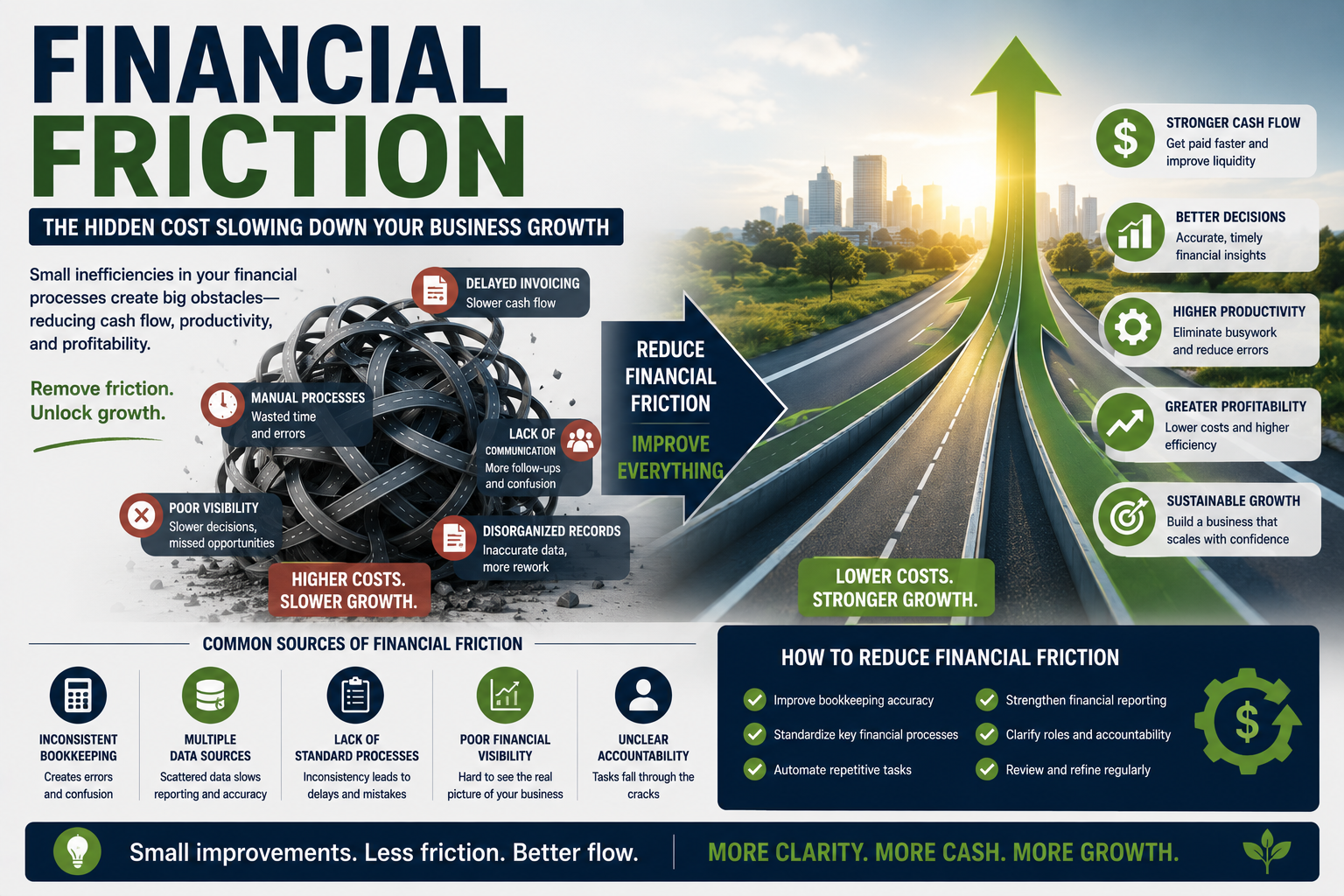
Financial Friction: The Hidden Cost Slowing Down Small Business Growth
Most business owners focus on obvious challenges when trying to grow their companies. They look at: While these factors are important, many businesses overlook a silent growth killer that impacts nearly every aspect of the organization: Financial friction. Financial friction refers to the unnecessary obstacles, delays, inefficiencies, and complications that prevent money, information, and decisions
-
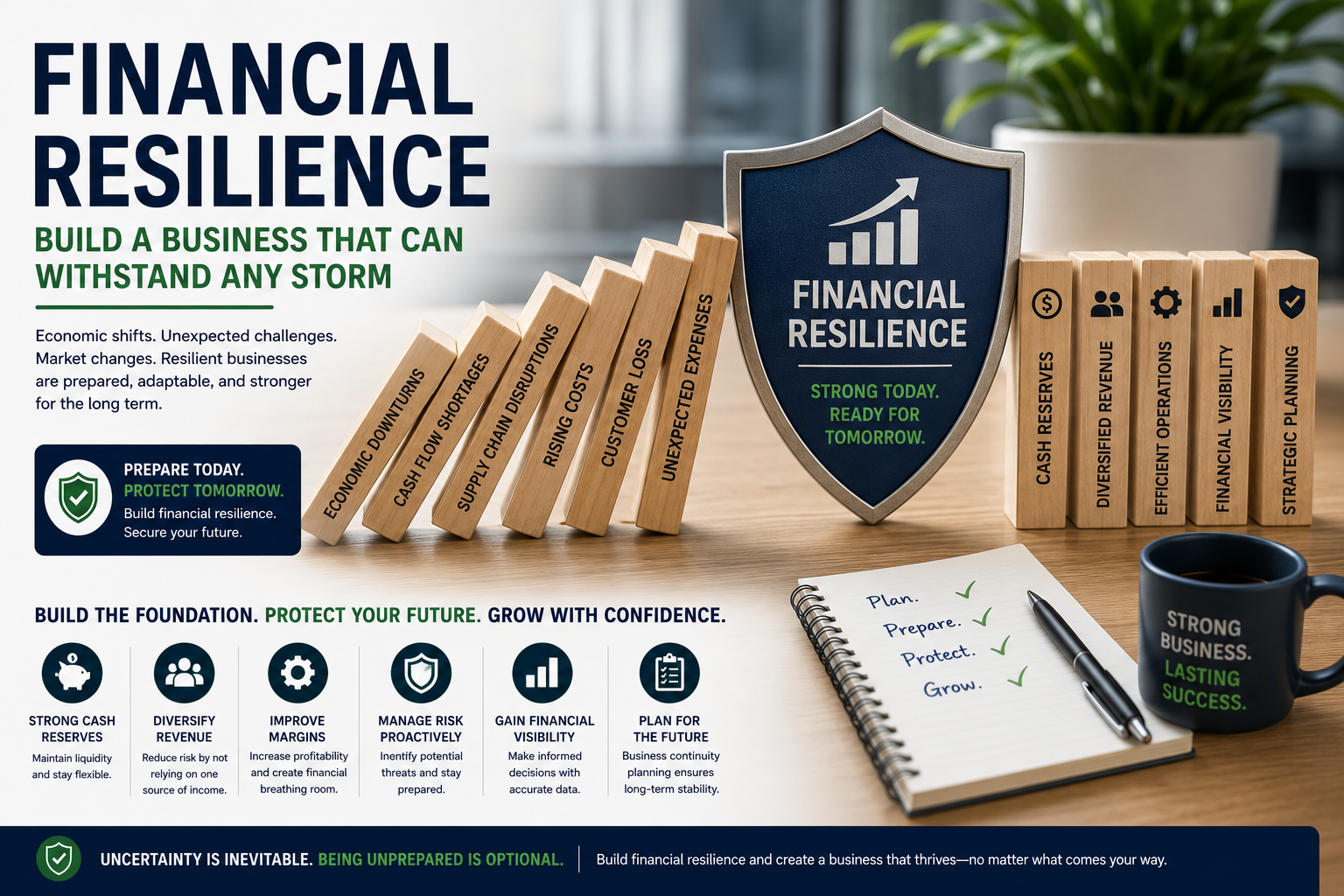
Financial Resilience: How Small Businesses Build a Business That Can Withstand Economic Uncertainty
Introduction Most small business owners spend significant time planning for growth. They focus on: While growth is important, many businesses overlook another critical objective: Financial resilience. Financial resilience is a company’s ability to withstand unexpected disruptions while continuing to operate effectively. Economic slowdowns, supply chain disruptions, customer losses, market shifts, inflation, labor shortages, and unexpected
-
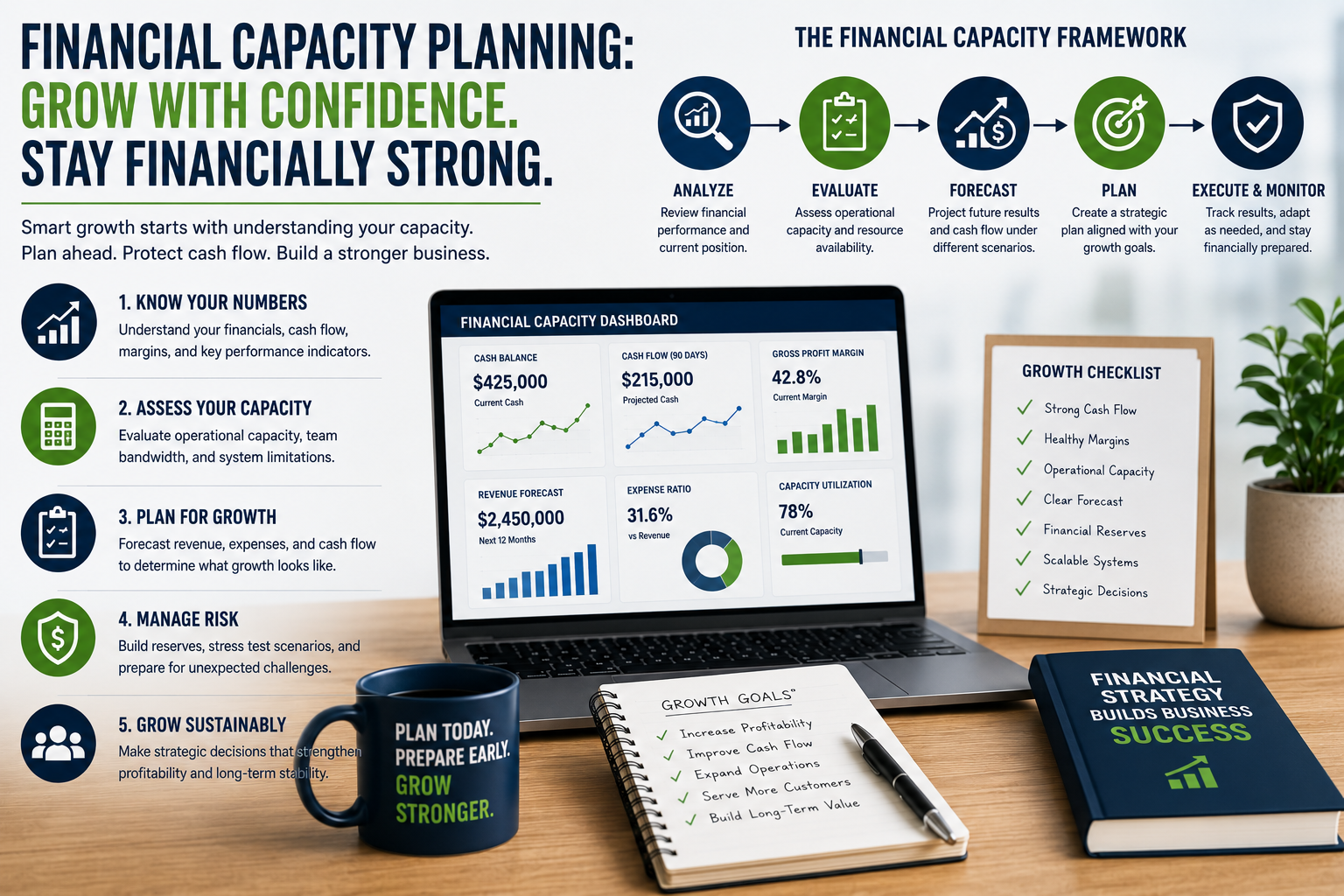
Financial Capacity Planning: How Small Businesses Prepare for Sustainable Growth Without Creating Financial Stress
Growth is exciting for small businesses. More customers, increasing revenue, expanding teams, and new opportunities often signal progress. But many businesses discover that growth can also create unexpected financial pressure. Revenue increases do not automatically guarantee stability. In fact, rapid growth often exposes weaknesses in: Many businesses unintentionally create financial stress while trying to grow.
-
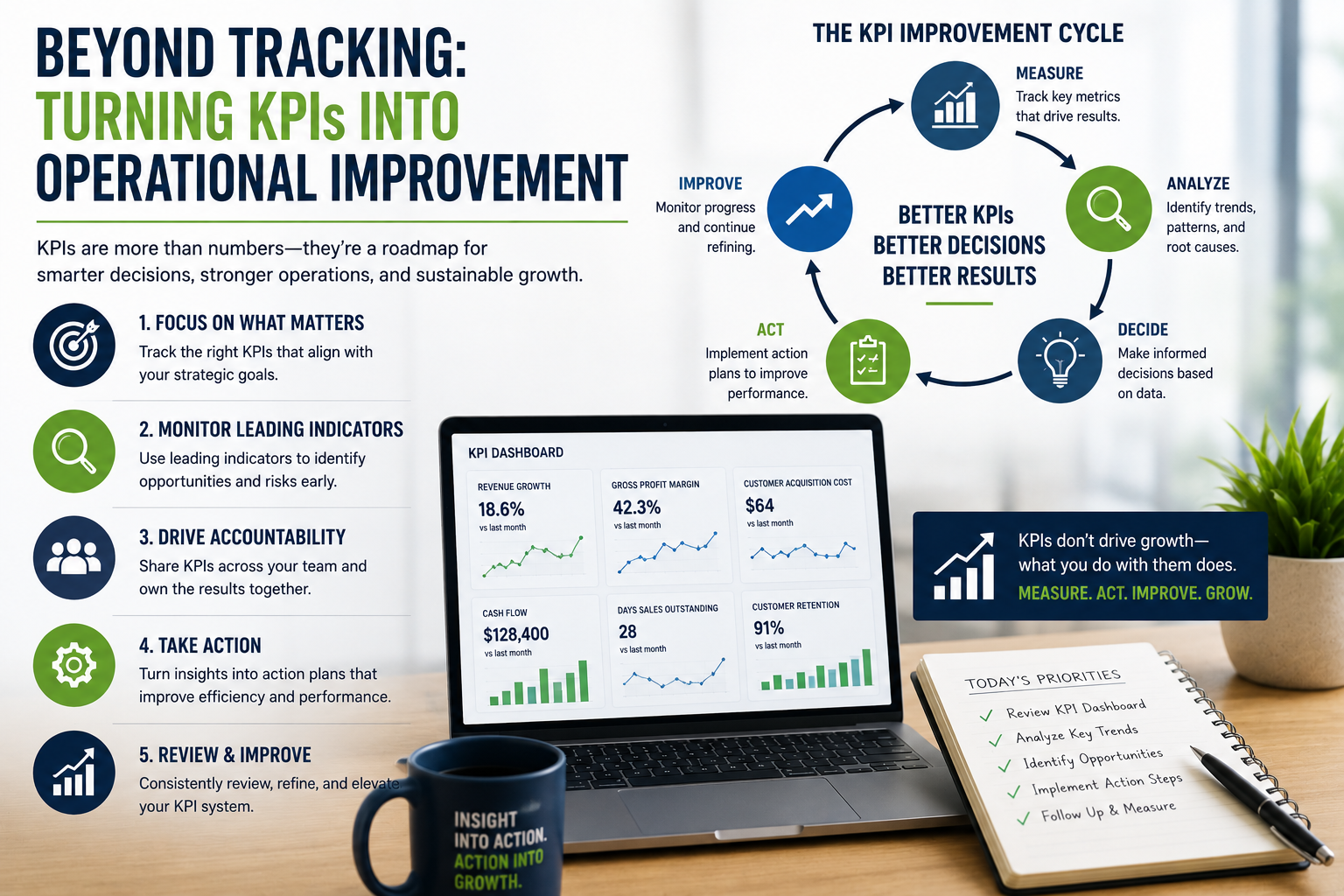
Beyond Tracking: How Small Businesses Turn KPIs Into Operational Improvement
Key Performance Indicators (KPIs) are one of the most powerful tools a business can use to improve performance, increase profitability, and create sustainable growth. But many businesses misunderstand how KPIs should actually function. The article “What Are KPIs and How to Use Them Effectively” on Your Accounting Service Blog Posts explains the importance of measuring
-
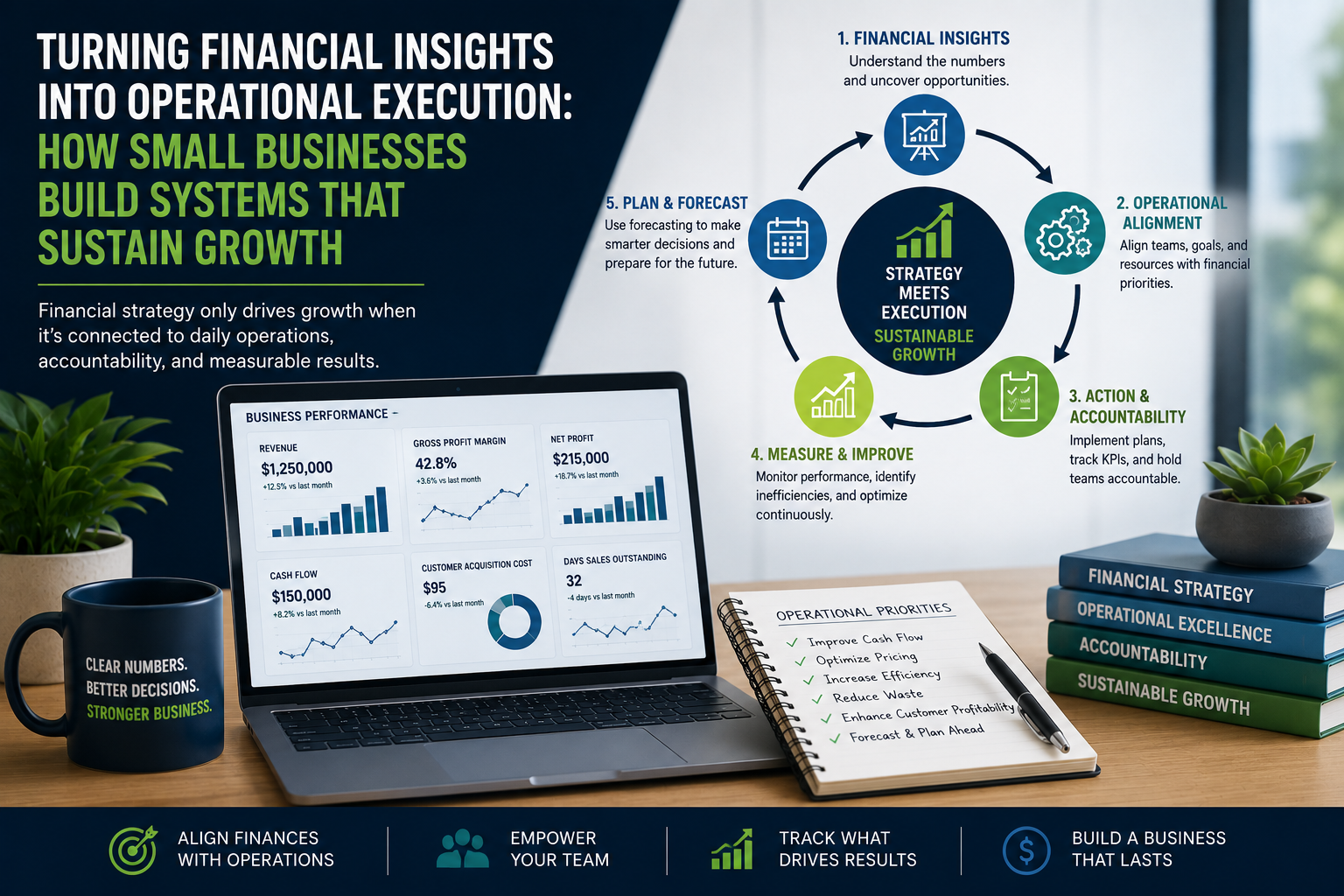
Turning Financial Insights Into Operational Execution: How Small Businesses Build Systems That Sustain Growth
Many small businesses eventually reach a critical stage where financial visibility improves, reports become more organized, and leadership finally begins understanding the numbers behind the business. But understanding financial reports is only part of the equation. The next challenge is operational execution. The article “From Financial Reports to Financial Strategy: How Small Businesses Turn Numbers
-
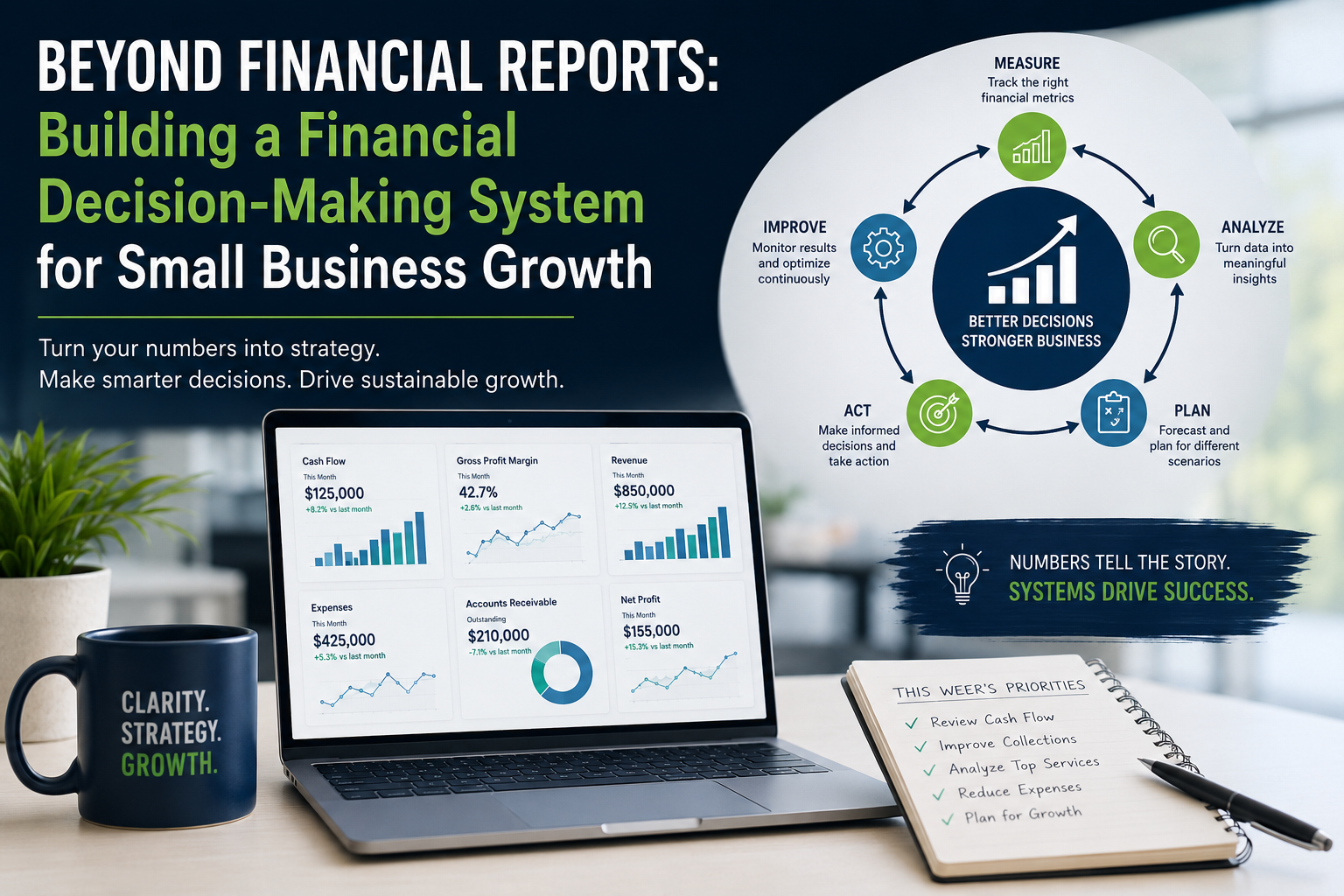
Beyond the Reports: Building a Financial Decision-Making System for Small Business Growth
Many small business owners eventually reach a turning point where basic bookkeeping and financial reporting are no longer enough. They may already understand how to read their numbers, review profit and loss statements, or monitor cash flow. But the next challenge is far more important: How do you consistently turn financial information into better operational
-
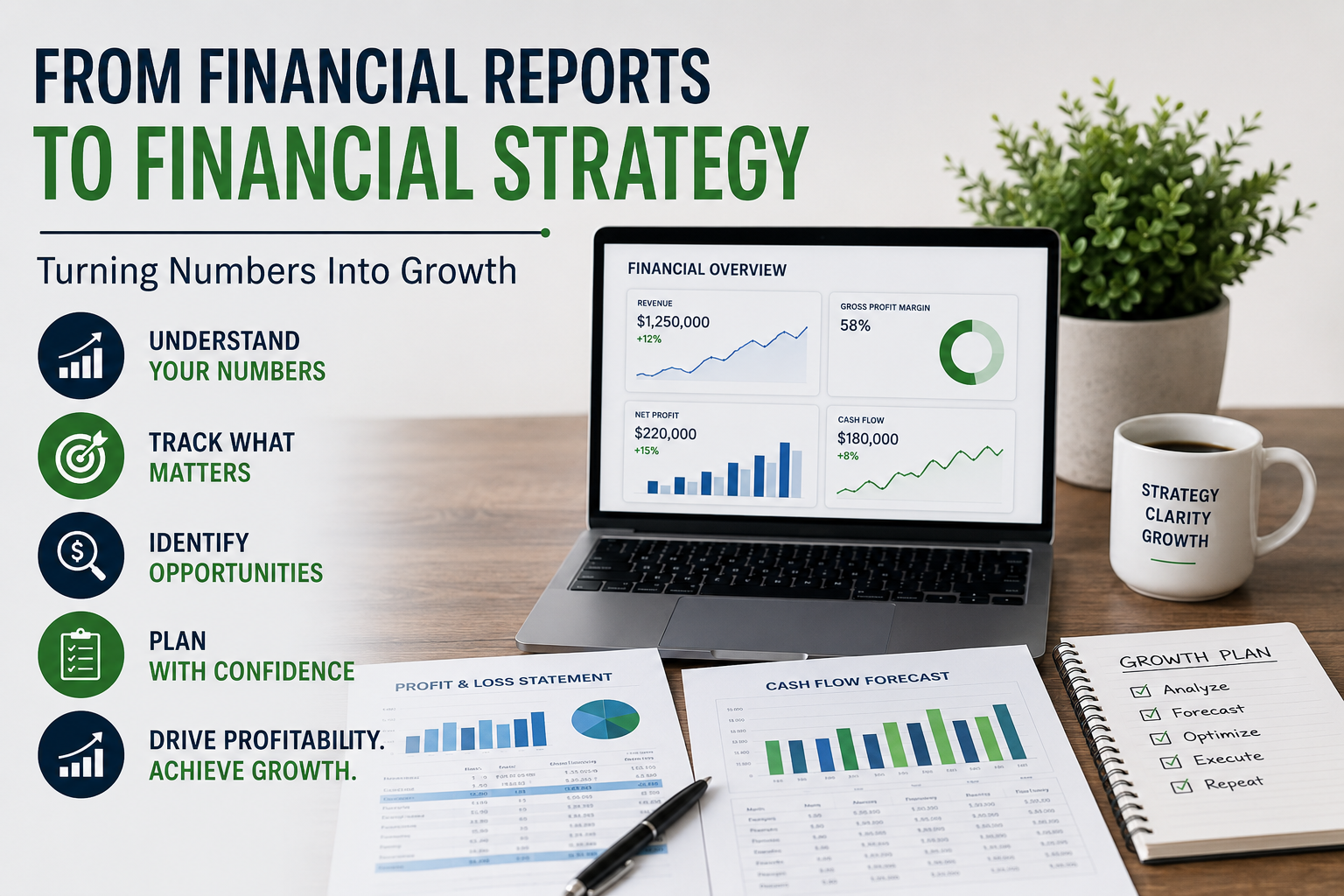
From Financial Reports to Financial Strategy: How Small Businesses Turn Numbers Into Growth
Many small business owners review financial reports every month—but very few use those reports to drive strategic decisions. Bookkeeping, reconciliations, and financial statements are important, but they are only the starting point. The businesses that grow consistently are the ones that transform financial data into actionable strategy. This article expands on topics already discussed throughout
-
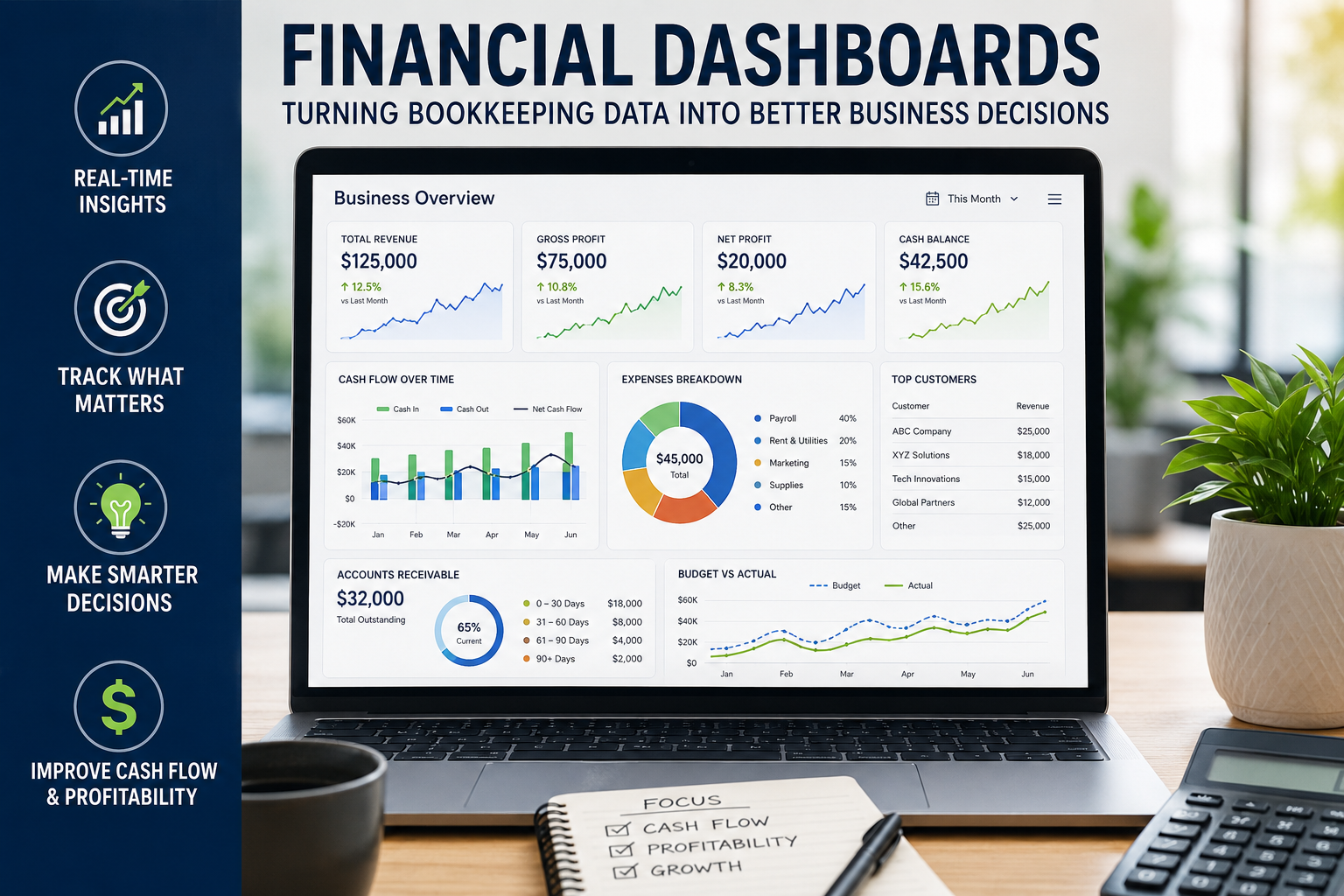
Financial Dashboards: Turning Bookkeeping Data Into Better Business Decisions
Small business owners often have access to financial data—but not financial clarity. Many businesses generate reports every month through accounting software like QuickBooks or Xero, yet very few owners consistently use that information to guide strategic decisions. Instead, they operate reactively: checking bank balances, scrambling during tax season, or trying to solve cash flow problems