
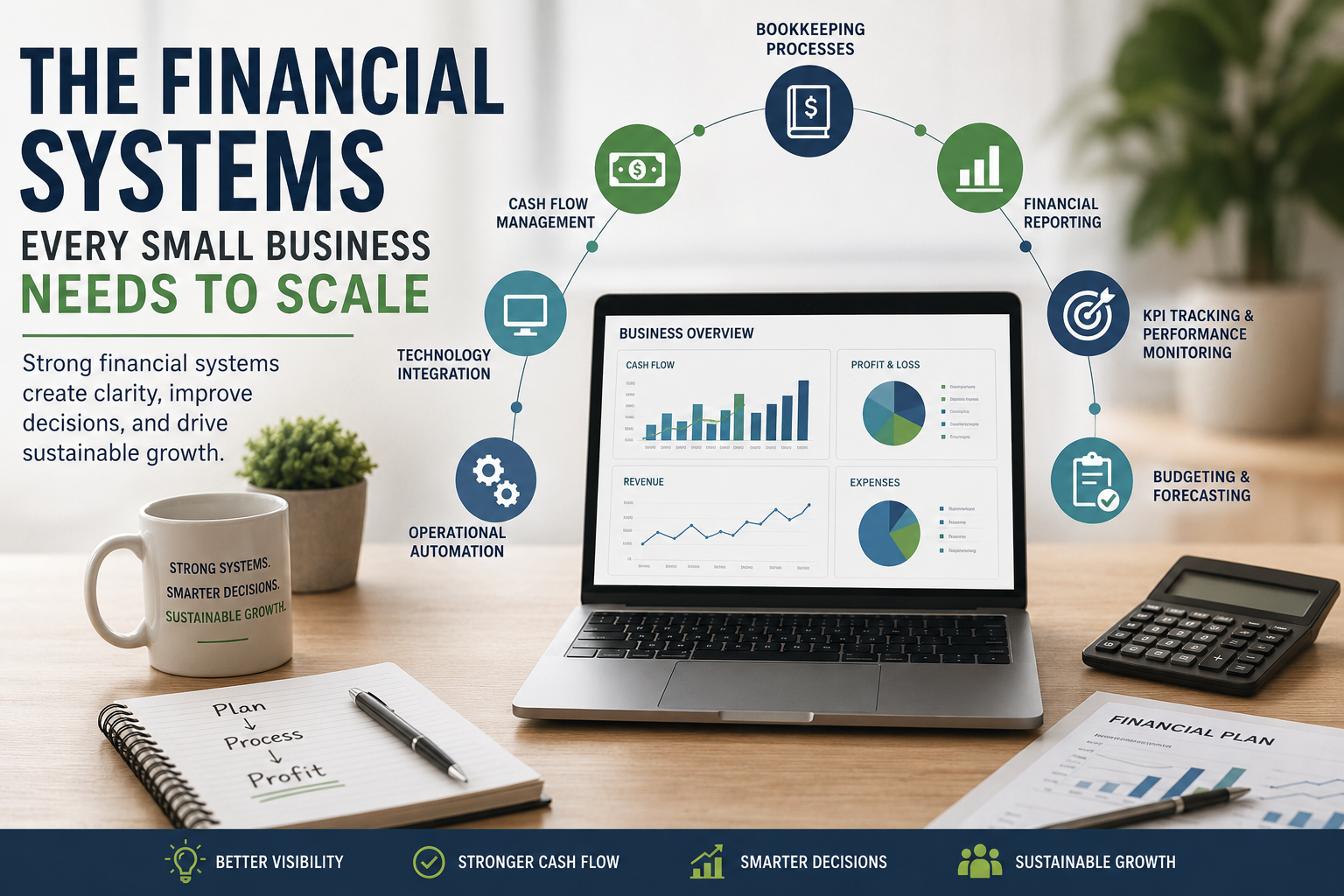

Running a small business often starts with hustle, instinct, and adaptability. In the early stages, many business owners rely on spreadsheets, bank balances, and day-to-day decision-making to manage operations. But as businesses grow, that approach becomes increasingly risky.
Growth without structure creates confusion.
Revenue may increase while profitability declines. Cash flow problems appear unexpectedly. Tax issues emerge. Teams become reactive instead of strategic. Owners feel busier than ever but less in control.
The businesses that scale successfully are rarely the ones working the hardest—they are the ones operating with strong financial systems.
At Your Accounting Service, we help businesses create the financial infrastructure necessary for sustainable growth. While many companies focus only on increasing sales, long-term success depends on building systems that support smarter decisions, operational efficiency, and financial visibility.
This article complements the existing financial management, KPI, forecasting, and bookkeeping content already published on your site by focusing on the operational systems that connect everything together.
Why Financial Systems Matter
A financial system is more than accounting software.
It is the collection of processes, tools, reporting structures, and operational workflows that allow a business to:
- Track profitability accurately
- Monitor cash flow consistently
- Manage expenses proactively
- Forecast future performance
- Make informed strategic decisions
- Reduce financial errors
- Improve accountability
- Scale efficiently
Without reliable systems, businesses often operate in “survival mode.”
Common warning signs include:
- Constant cash shortages
- Missed invoices
- Inaccurate bookkeeping
- Tax filing stress
- Unclear profitability
- Duplicate expenses
- Poor inventory control
- Delayed financial reporting
- Reactive decision-making
Many small businesses do not fail because they lack revenue.
They fail because they lack financial visibility and operational control.
System #1: Consistent Bookkeeping Processes
Bookkeeping is the foundation of every financial system.
If bookkeeping is inconsistent, delayed, or inaccurate, every financial report becomes unreliable.
Strong bookkeeping systems should include:
Daily or Weekly Transaction Management
Businesses should consistently:
- Categorize transactions
- Match receipts
- Record income
- Monitor expenses
- Review unusual charges
- Track owner draws and distributions
Waiting until month-end—or worse, tax season—creates errors and confusion.
Monthly Bank Reconciliation
Bank and credit card accounts should be reconciled every month.
This process helps identify:
- Duplicate transactions
- Missing expenses
- Fraudulent charges
- Uncategorized activity
- Accounting discrepancies
Organized Financial Documentation
Every business should maintain:
- Digital receipt storage
- Vendor invoices
- Payroll records
- Tax documents
- Loan agreements
- Financial statements
Organization reduces stress and improves audit readiness.
System #2: Reliable Cash Flow Management
Profit does not guarantee cash flow.
Many profitable businesses still struggle financially because they cannot manage timing.
Cash flow systems help businesses:
- Predict shortages
- Prepare for slow periods
- Plan large purchases
- Avoid unnecessary debt
- Maintain operational stability
Build a Weekly Cash Flow Review
Instead of only reviewing monthly reports, businesses should monitor:
- Current bank balances
- Upcoming bills
- Payroll obligations
- Expected receivables
- Tax payments
- Loan payments
Weekly visibility allows faster decision-making.
Establish Cash Reserve Targets
Businesses should determine:
- Minimum operating cash needs
- Emergency reserve targets
- Seasonal reserve requirements
A healthy reserve creates stability during unexpected downturns.
Improve Accounts Receivable Processes
Late payments create cash flow problems quickly.
Businesses should:
- Invoice immediately
- Use automated reminders
- Offer online payments
- Follow up consistently
- Review aging reports weekly
The faster receivables are collected, the stronger the business becomes.
System #3: Financial Reporting Frameworks
Financial reports should guide decisions—not simply satisfy tax requirements.
Strong reporting systems provide business owners with clarity.
Essential Monthly Reports
Every business should regularly review:
Profit & Loss Statement
Shows:
- Revenue
- Cost of goods sold
- Operating expenses
- Net profit
This report measures profitability and operational efficiency.
Balance Sheet
Shows:
- Assets
- Liabilities
- Equity
This report reveals overall financial health.
Statement of Cash Flow
Tracks:
- Operating cash flow
- Investing activity
- Financing activity
This report explains how money actually moves through the business.
These reports work together to provide a complete financial picture.
System #4: KPI Tracking and Performance Monitoring
Many businesses collect data without actually using it.
KPIs (Key Performance Indicators) transform raw financial information into actionable insights.
Examples include:
- Gross profit margin
- Net profit percentage
- Customer acquisition cost
- Average transaction value
- Days sales outstanding
- Inventory turnover
- Labor cost percentage
- Revenue growth rate
Tracking KPIs consistently helps businesses:
- Identify trends early
- Improve accountability
- Measure operational efficiency
- Make faster decisions
- Focus on high-impact improvements
The goal is not collecting more data.
The goal is using the right data.
System #5: Budgeting and Forecasting Systems
A business without forecasting is operating blindly.
Budgets and forecasts help leadership anticipate future challenges before they become emergencies.
Effective Budgeting Includes:
- Revenue projections
- Payroll planning
- Marketing budgets
- Equipment purchases
- Software expenses
- Operational investments
- Tax planning
Forecasting Helps Businesses Answer Questions Like:
- Can we afford another employee?
- Is expansion financially realistic?
- How much revenue is required to maintain profitability?
- What happens if sales decline 20%?
- How much cash reserve is necessary?
Forecasting turns uncertainty into strategy.
System #6: Operational Workflow Automation
Manual financial processes create inefficiencies.
Automation improves accuracy while reducing administrative workload.
Businesses can automate:
- Invoice generation
- Payment reminders
- Recurring billing
- Payroll processing
- Expense tracking
- Receipt capture
- Financial reporting
- Inventory alerts
Automation reduces human error while improving consistency.
It also allows business owners to spend more time focusing on growth rather than administrative tasks.
System #7: Technology Integration
Disconnected software creates operational bottlenecks.
Modern businesses benefit from integrated systems that connect:
- Accounting software
- Payroll platforms
- Inventory systems
- CRM tools
- Payment processors
- Financial dashboards
- Project management systems
Integrated systems improve reporting accuracy and operational visibility.
Popular tools many businesses utilize include:
- QuickBooks Online
- Xero
- Zoho Books
- Payroll integrations
- Cash flow forecasting platforms
- KPI dashboards
The right technology stack depends on the size and complexity of the business.
Common Financial System Mistakes Small Businesses Make
Relying on Bank Balances Alone
A bank balance does not show:
- Upcoming liabilities
- Profitability
- Tax obligations
- Accounts receivable
- Outstanding bills
Financial reports provide the full picture.
Delaying Bookkeeping
Falling behind creates:
- Reporting errors
- Tax problems
- Missed deductions
- Cash flow confusion
- Poor decisions
Timely bookkeeping matters.
Mixing Personal and Business Finances
This creates:
- Accounting confusion
- Tax complications
- Reduced legal protection
- Inaccurate reporting
Separate accounts are essential.
Ignoring Financial Trends
Problems rarely appear overnight.
Most financial issues begin as small warning signs:
- Shrinking margins
- Rising expenses
- Slower collections
- Increasing debt
- Declining cash reserves
Consistent reporting helps identify issues early.
How Strong Financial Systems Create Growth
When businesses implement strong systems, several things happen:
Better Decision-Making
Owners gain confidence because decisions are based on real financial data—not assumptions.
Improved Profitability
Businesses identify waste, improve pricing, and focus on high-performing activities.
Reduced Stress
Clear systems reduce chaos and uncertainty.
Easier Scaling
Growth becomes manageable because operational structures already exist.
Increased Business Value
Well-organized financial systems make businesses more attractive to:
- Investors
- Buyers
- Lenders
- Strategic partners
Final Thoughts
Successful businesses are not built on revenue alone.
They are built on systems.
Strong financial systems create clarity, accountability, efficiency, and long-term stability. They allow business owners to move from reactive decision-making to strategic leadership.
The earlier these systems are implemented, the easier it becomes to scale profitably and sustainably.
At Your Accounting Service, we help businesses build organized financial processes that support smarter growth, improved cash flow management, and long-term operational success. Whether you need bookkeeping support, financial reporting, cleanup services, or strategic financial guidance, having the right systems in place can transform how your business operates.