
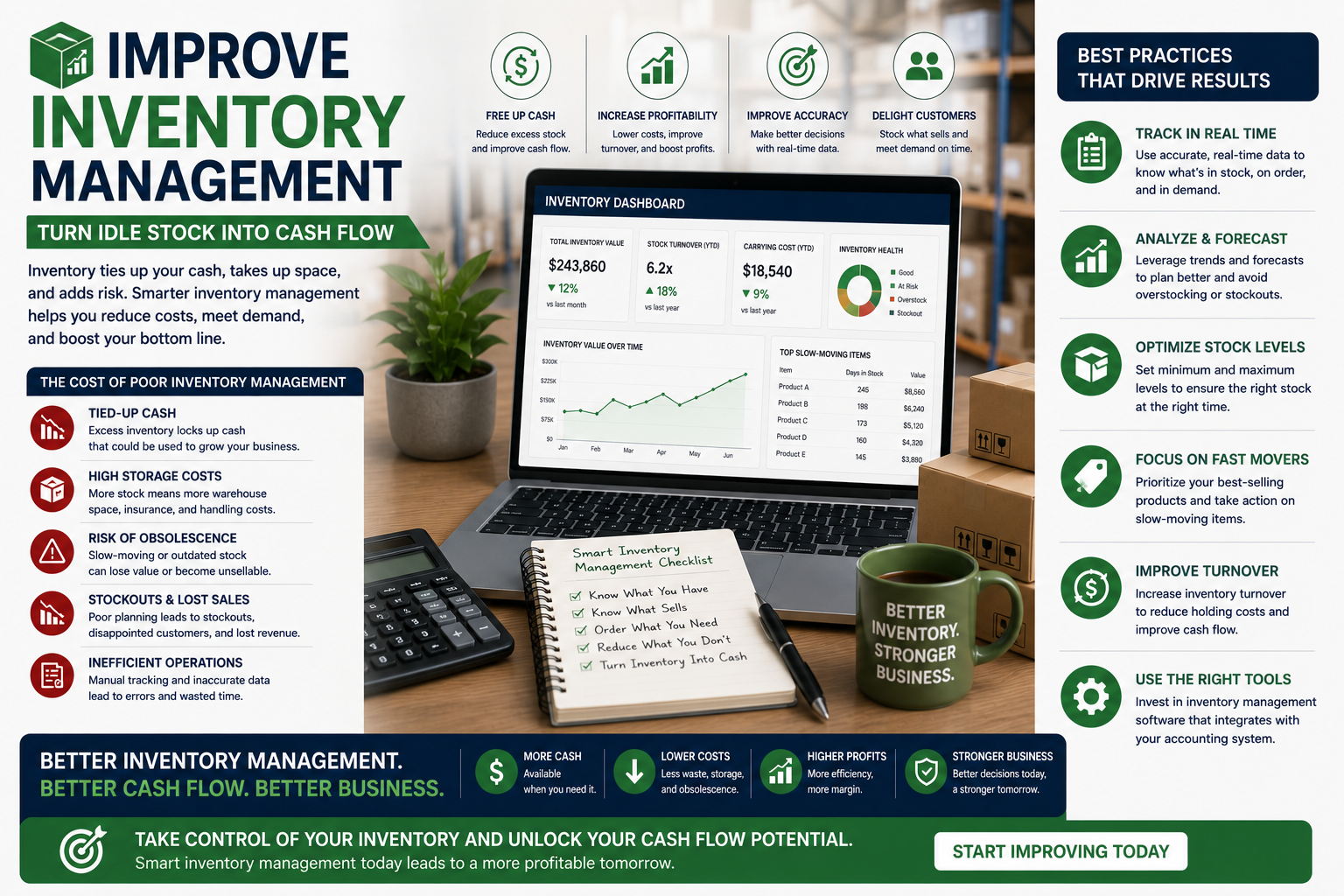
Introduction: Your Inventory Is Your Cash

If you hold inventory, your cash is literally sitting on shelves.
Every unsold product represents money that could be reinvested into growth—marketing, hiring, expansion, or new opportunities. Poor inventory management doesn’t just create clutter; it quietly drains your cash flow and limits your business potential.
The goal isn’t just to manage inventory—it’s to convert inventory into cash as quickly and efficiently as possible.
In this guide, we’ll break down actionable strategies to improve inventory management, increase turnover, and unlock trapped capital.
Why Inventory Management Matters More Than Ever
Modern businesses operate in a fast-moving environment where cash flow is king. Inventory that sits too long leads to:
- Tied-up capital
- Increased storage costs
- Product obsolescence
- Discounting and margin loss
- Missed growth opportunities
On the flip side, optimized inventory management helps you:
- Improve liquidity
- Reduce waste
- Increase profitability
- Make smarter purchasing decisions
1. Reduce Overstocking
Overstocking is one of the biggest killers of cash flow.
Why It Happens:
- Overestimating demand
- Bulk purchasing for discounts
- Poor forecasting systems
- Fear of stockouts
How to Fix It:
- Use historical sales data to forecast demand accurately
- Set minimum and maximum stock levels
- Implement automated reorder points
- Regularly review slow-moving SKUs
Pro Tip: It’s better to restock more often than to hold excess inventory for months.
For more information on this topic: Reduce Overstocking: A Smart Strategy to Protect Cash Flow and Improve Efficiency
2. Implement Just-in-Time (JIT) Inventory
Just-in-Time inventory is a strategy where you receive goods only when you need them.
Benefits:
- Minimizes storage costs
- Reduces risk of dead stock
- Improves cash flow
- Keeps operations lean
How to Implement JIT:
- Build strong relationships with reliable suppliers
- Shorten lead times where possible
- Use real-time inventory tracking systems
- Align purchasing closely with sales trends
Important: JIT requires precision. Poor supplier reliability can disrupt operations—so choose partners carefully.
For more on this topic see: Implement Just-In-Time (JIT) Inventory: A Complete Guide to Lean, Cash-Efficient Operations
3. Eliminate Slow-Moving Products
Not all products deserve shelf space.
Identify Slow-Movers:
- Low sales velocity
- High days-in-inventory
- Frequent discounting required to sell
What to Do:
- Run promotions or bundles to clear stock
- Offer discounts to liquidate inventory quickly
- Discontinue underperforming SKUs
- Reallocate capital into high-performing products
Rule of Thumb: If a product doesn’t sell consistently, it’s costing you money—not making it.
4. Negotiate Smaller, More Frequent Orders
Bulk purchasing might seem like a cost-saving strategy—but it often backfires.
The Problem:
- Large orders tie up cash
- Increase storage costs
- Lead to overstocking
The Solution:
- Negotiate smaller, more frequent shipments
- Work with suppliers on flexible terms
- Focus on inventory turnover, not just unit cost
Benefits:
- Better cash flow management
- Reduced risk of excess inventory
- More agility in responding to demand changes
5. Improve Inventory Turnover Rate
Your inventory turnover rate is one of the most important metrics in your business.
Formula:
Inventory Turnover = Cost of Goods Sold (COGS) ÷ Average Inventory
Why It Matters:
- Higher turnover = faster cash conversion
- Lower turnover = cash stuck in inventory
How to Improve It:
- Optimize pricing strategies
- Focus on best-selling products
- Improve marketing for slow-moving items
- Reduce purchase quantities
6. Use Inventory Management Technology
Manual tracking leads to errors, inefficiencies, and missed opportunities.
Tools to Consider:
- Inventory management software (e.g., TradeGecko, Cin7, NetSuite)
- ERP systems
- Real-time tracking dashboards
- Demand forecasting tools
Key Features to Look For:
- Automated reordering
- Sales analytics
- SKU performance tracking
- Integration with accounting systems
7. Align Inventory with Demand Forecasting
Better forecasting = smarter inventory decisions.
Methods:
- Analyze historical sales trends
- Consider seasonality
- Use predictive analytics tools
- Monitor market trends and customer behavior
Outcome: You stock what sells—and avoid what doesn’t.
8. Create a Lean Inventory Strategy
Lean inventory focuses on efficiency, speed, and minimizing waste.
Principles:
- Keep only what you need
- Move products quickly
- Continuously optimize inventory levels
- Eliminate inefficiencies
The Ultimate Goal: Convert Inventory into Cash Faster
Everything comes down to one objective:
👉 Turn inventory into cash as quickly as possible.
When you:
- Reduce overstocking
- Use just-in-time systems
- Eliminate slow-moving products
- Order smarter and more frequently
You free up capital that can fuel growth instead of sitting idle.
Final Thoughts
Inventory isn’t just a line item—it’s a major financial lever in your business.
Companies that master inventory management gain a competitive edge by improving cash flow, increasing agility, and maximizing profitability.
Start small:
- Audit your inventory today
- Identify slow movers
- Adjust your ordering strategy
Then build from there.