
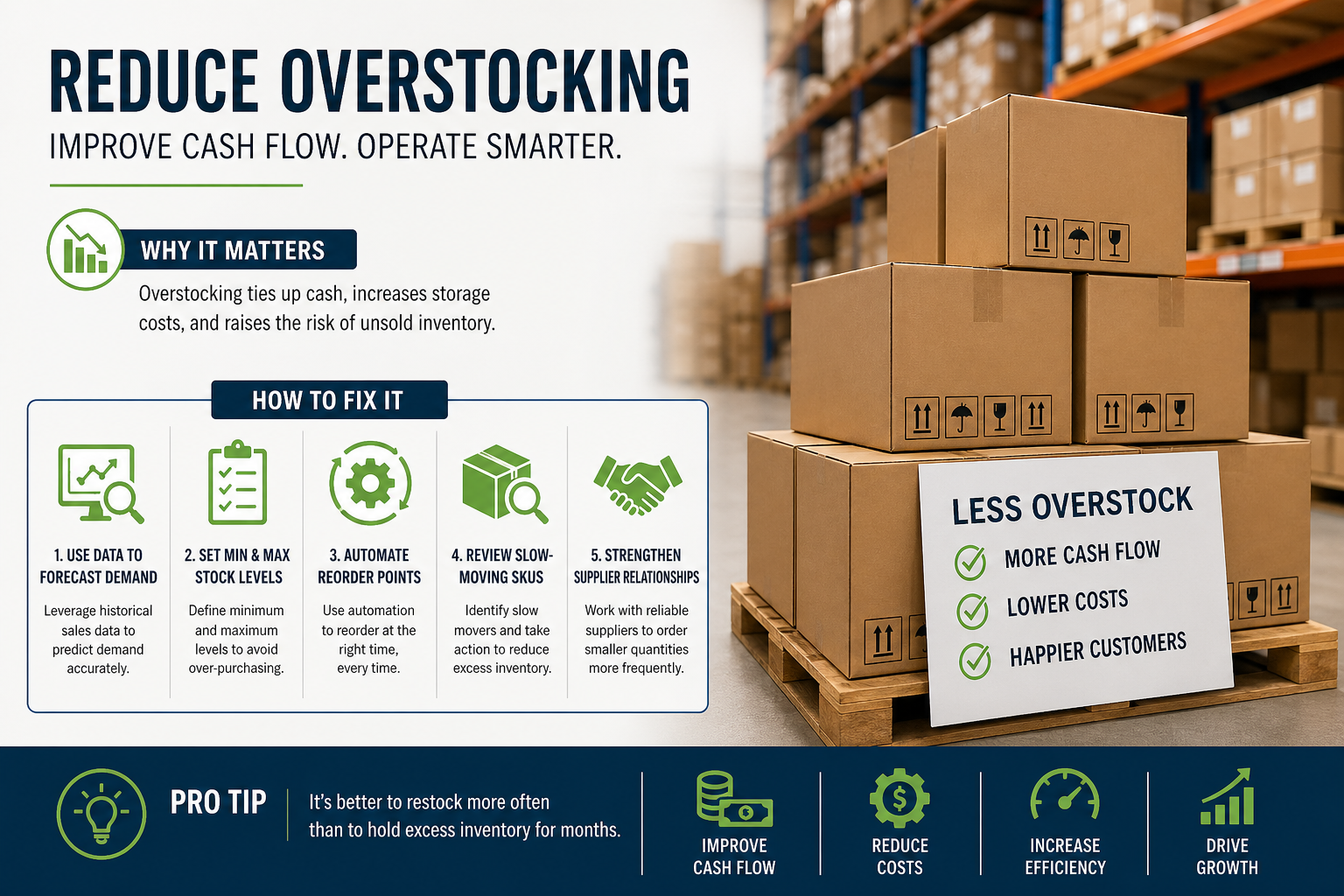
Overstocking might seem like a safety net—but in reality, it’s one of the fastest ways to drain your business’s cash flow. Excess inventory ties up capital, increases storage costs, and raises the risk of unsold or obsolete products.
If you want a leaner, more profitable operation, reducing overstocking should be a top priority.
Why Overstocking Hurts Your Business
Holding too much inventory creates hidden costs that can quietly erode profitability:
- Cash Flow Drain: Money tied up in inventory isn’t available for growth, marketing, or operations
- Storage Costs: Warehousing, insurance, and handling expenses add up quickly
- Obsolescence Risk: Products can become outdated, damaged, or unsellable
- Reduced Agility: Excess inventory makes it harder to pivot when market demand changes
In short, overstocking limits flexibility and slows your business down.
Why Overstocking Happens
Understanding the root causes is the first step to fixing the problem:
1. Overestimating Demand
Many businesses rely on guesswork instead of data, leading to inflated purchasing decisions.
2. Bulk Purchasing for Discounts
Buying in large quantities may lower per-unit cost—but it often increases total holding costs and risk.
3. Poor Forecasting Systems
Without accurate forecasting tools, inventory decisions become reactive rather than strategic.
4. Fear of Stockouts
Running out of stock can hurt sales, but overcompensating leads to excess inventory sitting idle.
How to Reduce Overstocking Effectively
1. Use Historical Sales Data
Leverage past sales trends to make smarter purchasing decisions. Look for patterns in:
- Seasonal demand fluctuations
- Product performance over time
- Customer buying behavior
Data-driven forecasting reduces guesswork and improves accuracy.
2. Set Minimum and Maximum Stock Levels
Establish clear inventory thresholds:
- Minimum Level: The point at which you must reorder
- Maximum Level: The cap to prevent over-purchasing
This creates structure and prevents emotional or impulsive buying decisions.
3. Implement Automated Reorder Points
Automation ensures you reorder at the right time—without overstocking.
Benefits include:
- Consistent inventory levels
- Reduced manual errors
- Improved operational efficiency
Inventory management software can trigger orders based on real-time data and predefined rules.
4. Regularly Review Slow-Moving SKUs
Not all products perform equally. Identify inventory that isn’t selling and take action:
- Discount or bundle slow-moving items
- Stop reordering underperforming products
- Reallocate resources to high-performing SKUs
Regular inventory audits keep your product mix optimized.
5. Strengthen Supplier Relationships
Reliable suppliers allow you to order smaller quantities more frequently.
This reduces the need to “stockpile” inventory and helps maintain lean operations.
The Financial Impact of Better Inventory Control
Reducing overstocking directly improves:
- Cash Flow: More liquidity for growth and operations
- Profit Margins: Lower storage and waste costs
- Efficiency: Streamlined inventory management processes
- Scalability: Ability to adapt quickly to demand changes
A lean inventory strategy positions your business for sustainable growth.
Pro Tip: Lean Beats Loaded
It’s better to restock more frequently than to hold excess inventory for months.
Smaller, more frequent orders may slightly increase ordering costs—but they dramatically reduce risk, improve cash flow, and keep your business agile.
Final Thoughts
Overstocking isn’t just an inventory issue—it’s a financial strategy problem. By shifting to a data-driven, disciplined approach, you can free up cash, reduce waste, and operate more efficiently.
If your goal is to build a stronger, more resilient business, mastering inventory control is a critical step.
