
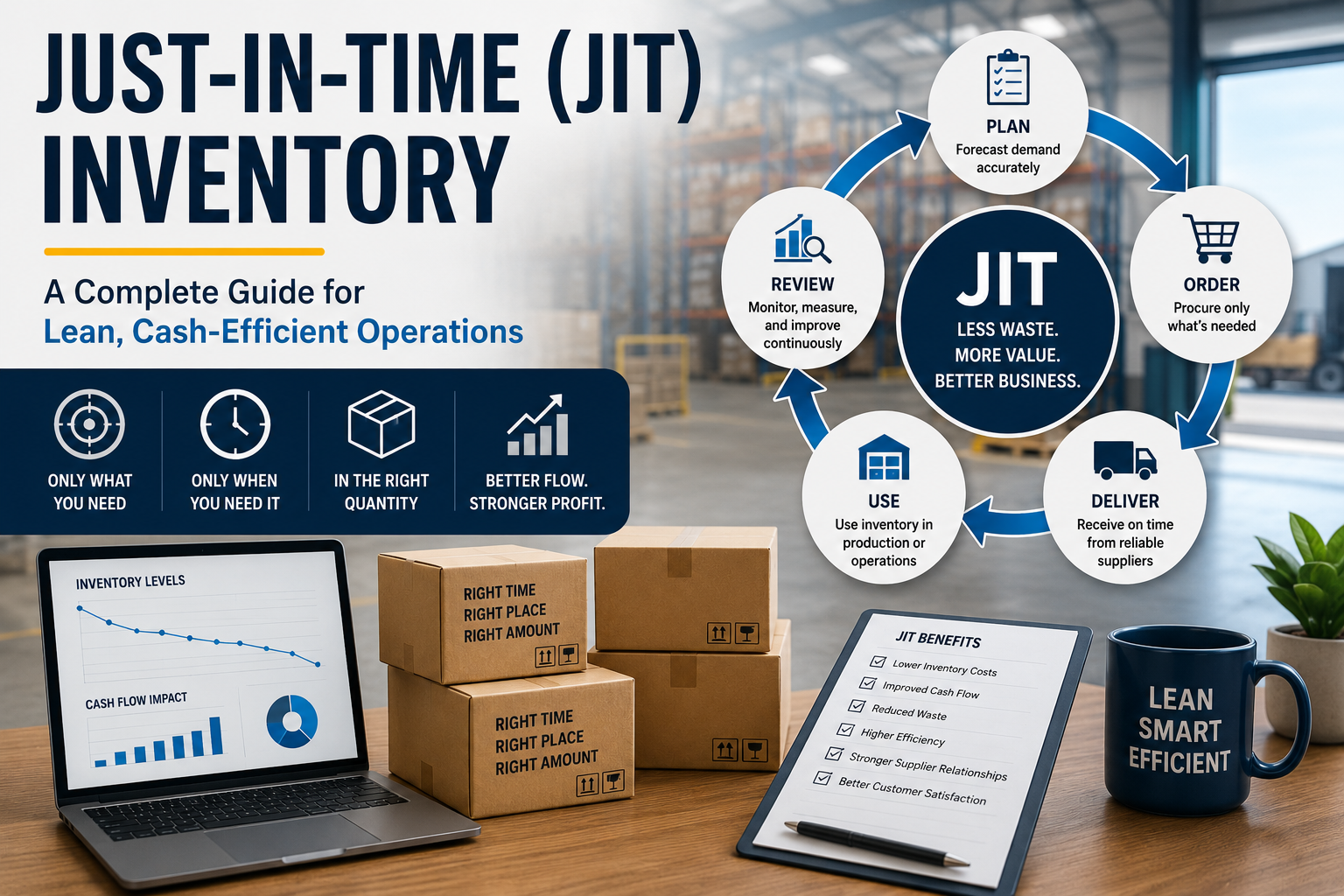

In today’s competitive business environment, efficiency isn’t optional—it’s essential. One of the most powerful ways to streamline operations and improve cash flow is by implementing Just-in-Time (JIT) inventory.
JIT is more than an inventory method—it’s a strategic approach that aligns purchasing, production, and sales to eliminate waste and maximize efficiency.
What Is Just-in-Time (JIT) Inventory?

Just-in-Time (JIT) inventory is a system where businesses receive goods only when they are needed for production or sales—rather than keeping large amounts of stock on hand.
Instead of tying up capital in inventory sitting on shelves, JIT ensures materials arrive exactly when required, reducing waste and increasing operational efficiency.
This model is widely used in manufacturing, retail, and even service-based businesses that manage supplies or resources.
Key Benefits of JIT Inventory
1. Minimizes Storage Costs
By reducing excess inventory, businesses lower expenses related to:
- Warehousing
- Insurance
- Handling and labor
- Inventory shrinkage (damage, theft, spoilage)
Less inventory means less overhead eating into your margins.
2. Reduces Risk of Dead Stock
Holding too much inventory creates the risk of:
- Obsolete products
- Expired goods
- Unsold items tying up capital
JIT helps ensure you only stock what you can realistically sell, keeping your inventory fresh and relevant.
3. Improves Cash Flow
Cash tied up in inventory is cash you can’t use elsewhere.
With JIT:
- You purchase inventory closer to the point of sale
- You free up working capital
- You increase financial flexibility
This is especially valuable for small businesses and startups operating with limited resources.
4. Keeps Operations Lean
JIT is a core principle of lean business practices.
It encourages:
- Efficiency in procurement
- Streamlined processes
- Reduced waste across the organization
The result is a business that runs faster, smarter, and more profitably.
How to Implement JIT Inventory

Successfully implementing JIT requires planning, discipline, and the right systems in place.
1. Build Strong Supplier Relationships
Your suppliers are the backbone of your JIT system.
Focus on:
- Reliability and consistency
- Clear communication
- Agreed delivery schedules
- Backup supplier options
A delayed shipment can halt your operations—so trust and performance matter.
2. Shorten Lead Times
The shorter your lead times, the more responsive your business becomes.
You can reduce lead times by:
- Working with local or regional suppliers
- Negotiating faster production or delivery cycles
- Improving internal ordering processes
Shorter lead times = less need for buffer inventory.
3. Use Real-Time Inventory Tracking Systems
JIT requires accurate, up-to-the-minute data.
Implement tools that provide:
- Live inventory levels
- Automated reorder points
- Sales and demand tracking
- Integration with accounting or ERP systems
This eliminates guesswork and allows for data-driven decisions.
4. Align Purchasing with Sales Trends
JIT only works when purchasing is tightly connected to demand.
To do this:
- Analyze historical sales data
- Monitor seasonal trends
- Adjust purchasing dynamically
- Use forecasting tools
Your goal is to buy what you need—when you need it—no more, no less.
Challenges and Risks of JIT Inventory

While JIT offers significant advantages, it’s not without risks.
1. Supplier Dependence
If your supplier fails, your operations may stop entirely.
Solution: Maintain backup suppliers and contingency plans.
2. Supply Chain Disruptions
Events like delays, shortages, or global disruptions can impact availability.
Solution: Keep minimal safety stock for critical items.
3. Demand Fluctuations
Unexpected spikes in demand can lead to stockouts.
Solution: Combine JIT with smart forecasting and flexible ordering.
4. Implementation Complexity
Transitioning to JIT requires changes in processes, systems, and mindset.
Solution: Start small—test JIT with specific product lines before scaling.
Best Practices for JIT Success
To maximize the effectiveness of JIT, follow these proven practices:
- Start with high-turnover products
- Invest in inventory management software
- Track key metrics (turnover ratio, stockouts, lead times)
- Communicate frequently with suppliers
- Continuously refine forecasting models
JIT is not a “set it and forget it” system—it requires ongoing optimization.
Is JIT Inventory Right for Your Business?
JIT works best for businesses that:
- Have predictable demand patterns
- Can rely on consistent suppliers
- Want to improve cash flow and efficiency
- Are ready to invest in systems and process improvements
It may be less suitable for businesses with:
- Highly unpredictable demand
- Long or unreliable supply chains
- Critical items that must always be in stock
Final Thoughts
Just-in-Time inventory is a powerful strategy for businesses looking to operate lean, reduce costs, and improve cash flow. When executed correctly, it transforms inventory from a financial burden into a strategic advantage.
However, success depends on precision, reliability, and strong partnerships. With the right systems and planning in place, JIT can help your business scale efficiently while staying agile in a changing market.