
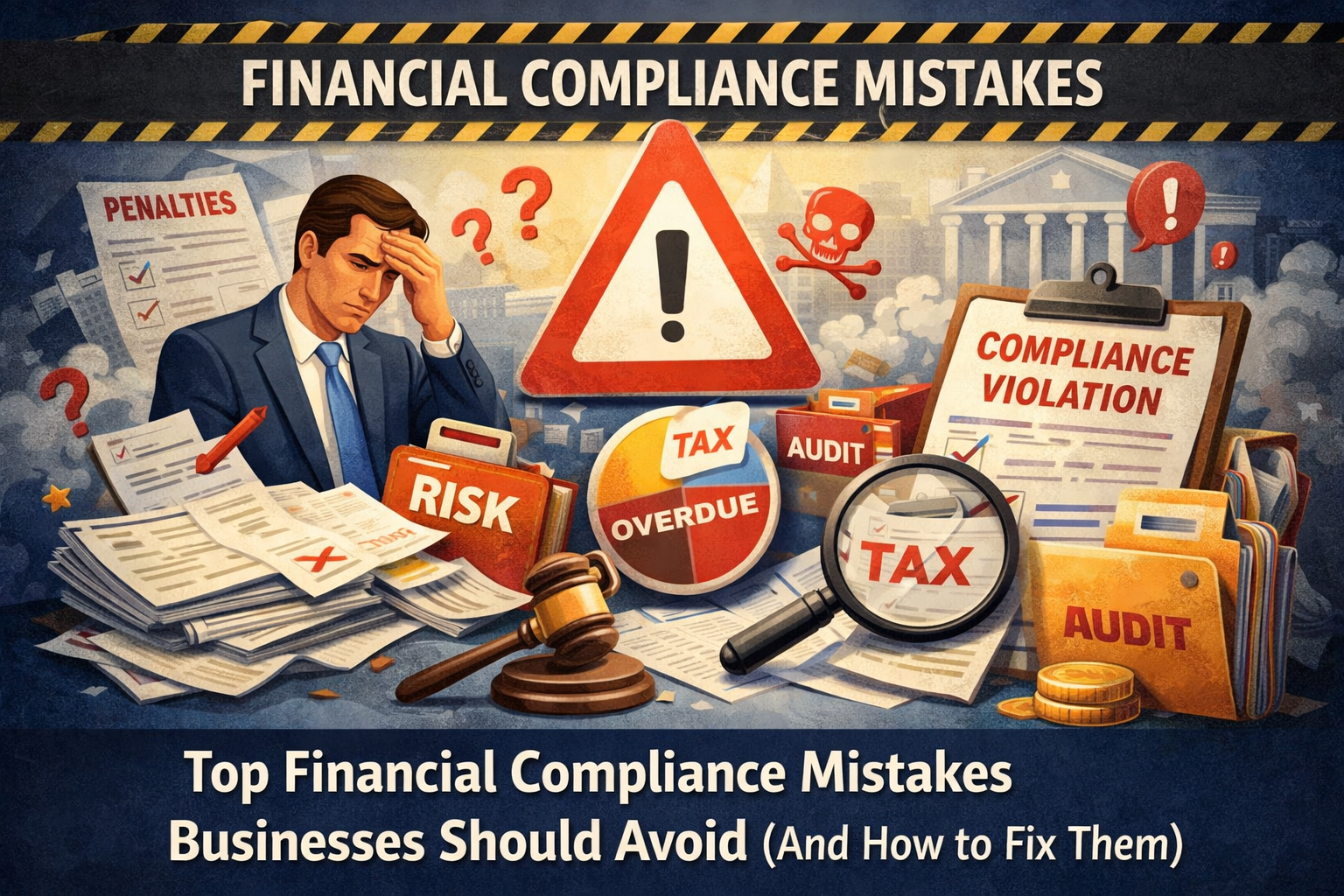
Top Financial Compliance Mistakes Businesses Should Avoid (And How to Fix Them)

Introduction
Financial compliance is no longer just a “back-office” concern—it’s a critical component of business survival. Regulations are increasing. Enforcement is stricter. Tax laws are evolving. Even small mistakes can lead to hefty fines, reputational damage, or legal action.
Whether you’re a startup, SME, or established enterprise, you should understand common compliance pitfalls. Avoiding these pitfalls can save you time, money, and stress.
In this guide, we’ll break down the top financial compliance mistakes businesses make—and how to avoid them.
1. Poor Record-Keeping
The Problem
Many businesses fail to maintain accurate and organized financial records. Missing receipts, incomplete ledgers, or inconsistent documentation can quickly become a compliance nightmare.
Why It Matters
Regulatory bodies require clear audit trails. Without proper records, you risk:
- Failed audits
- Tax penalties
- Inaccurate financial reporting
How to Avoid It
- Use cloud-based accounting software
- Keep records for the required retention period
- Automate expense tracking and invoicing
2. Misclassifying Employees and Contractors
The Problem
Incorrectly labeling workers as independent contractors instead of employees is a common compliance error.
Why It Matters
Misclassification can result in:
- Back taxes
- Fines and penalties
- Legal disputes
How to Avoid It
- Understand IRS or local classification rules
- Review contracts and job roles carefully
- Consult a legal or tax professional when unsure
3. Failing to Stay Updated on Regulations
The Problem
Financial regulations change frequently, and many businesses fail to keep up.
Why It Matters
Outdated practices can lead to:
- Non-compliance fines
- Operational disruptions
- Loss of licenses in regulated industries
How to Avoid It
- Subscribe to regulatory updates
- Work with compliance experts
- Conduct regular internal reviews
4. Inaccurate Tax Filings
The Problem
Errors in tax reporting—whether accidental or due to negligence—are one of the most common compliance issues.
Why It Matters
- Penalties and interest charges
- Increased audit risk
- Legal consequences
How to Avoid It
- Double-check all filings
- Use professional tax services
- Implement internal review processes
5. Weak Internal Controls
The Problem
Lack of proper checks and balances increases the risk of fraud and financial errors.
Why It Matters
Weak controls can lead to:
- Embezzlement
- Financial misstatements
- Compliance violations
How to Avoid It
- Separate financial duties among staff
- Implement approval workflows
- Conduct periodic audits
6. Ignoring Data Security and Privacy Regulations
The Problem
Financial data is highly sensitive, yet many businesses neglect proper security measures.
Why It Matters
Non-compliance with data laws (like GDPR or CCPA) can result in:
- Massive fines
- Data breaches
- Loss of customer trust
How to Avoid It
- Encrypt financial data
- Limit access to sensitive information
- Regularly update cybersecurity protocols
7. Late or Missed Filings
The Problem
Missing deadlines for tax returns, financial reports, or regulatory filings.
Why It Matters
- Late fees and penalties
- Increased scrutiny from regulators
- Damage to business credibility
How to Avoid It
- Use compliance calendars
- Set automated reminders
- Assign responsibility to specific team members
8. Proper Documentation of Financial Policies
The Problem
Many businesses operate without documented financial procedures.
Why It Matters
- Inconsistent processes
- Higher risk of errors
- Difficulty proving compliance
How to Avoid It
- Create clear financial policies
- Train employees regularly
- Update documentation as regulations change
9. Overlooking International Compliance Requirements
The Problem
Businesses operating globally often fail to comply with foreign tax laws and regulations.
Why It Matters
- Cross-border penalties
- Double taxation issues
- Legal complications
How to Avoid It
- Understand local regulations in each market
- Work with international tax advisors
- Monitor currency and reporting requirements
10. Not Conducting Regular Compliance Audits
The Problem
Many companies only review compliance when issues arise.
Why It Matters
- Hidden risks go undetected
- Problems escalate over time
- Increased likelihood of penalties
How to Avoid It
- Schedule quarterly or annual audits
- Use third-party auditors for objectivity
- Act on audit findings immediately
Key Takeaways
Avoiding financial compliance mistakes isn’t just about staying out of trouble—it’s about building a strong, scalable, and trustworthy business.
Remember:
- Stay organized with accurate records
- Keep up with changing regulations
- Invest in systems and expert support
- Audit regularly and proactively
Final Thoughts
Financial compliance can seem overwhelming, but the cost of ignoring it is far greater. By addressing these common mistakes early, businesses can reduce risk, improve efficiency, and focus on growth with confidence.
If you’re unsure about your current compliance status, you should consider a professional financial compliance review. This could save your business from costly mistakes down the road.
For additional information you may like this video from Accounting Basics on YouTube https://www.youtube.com/watch?v=MKdrRkX8dw4