

Introduction
When you’re running a business—especially in the early stages—it’s tempting to use the same bank account or credit card for everything. It feels easier, faster, and more convenient.
But this small shortcut can create major financial, legal, and tax problems down the road.
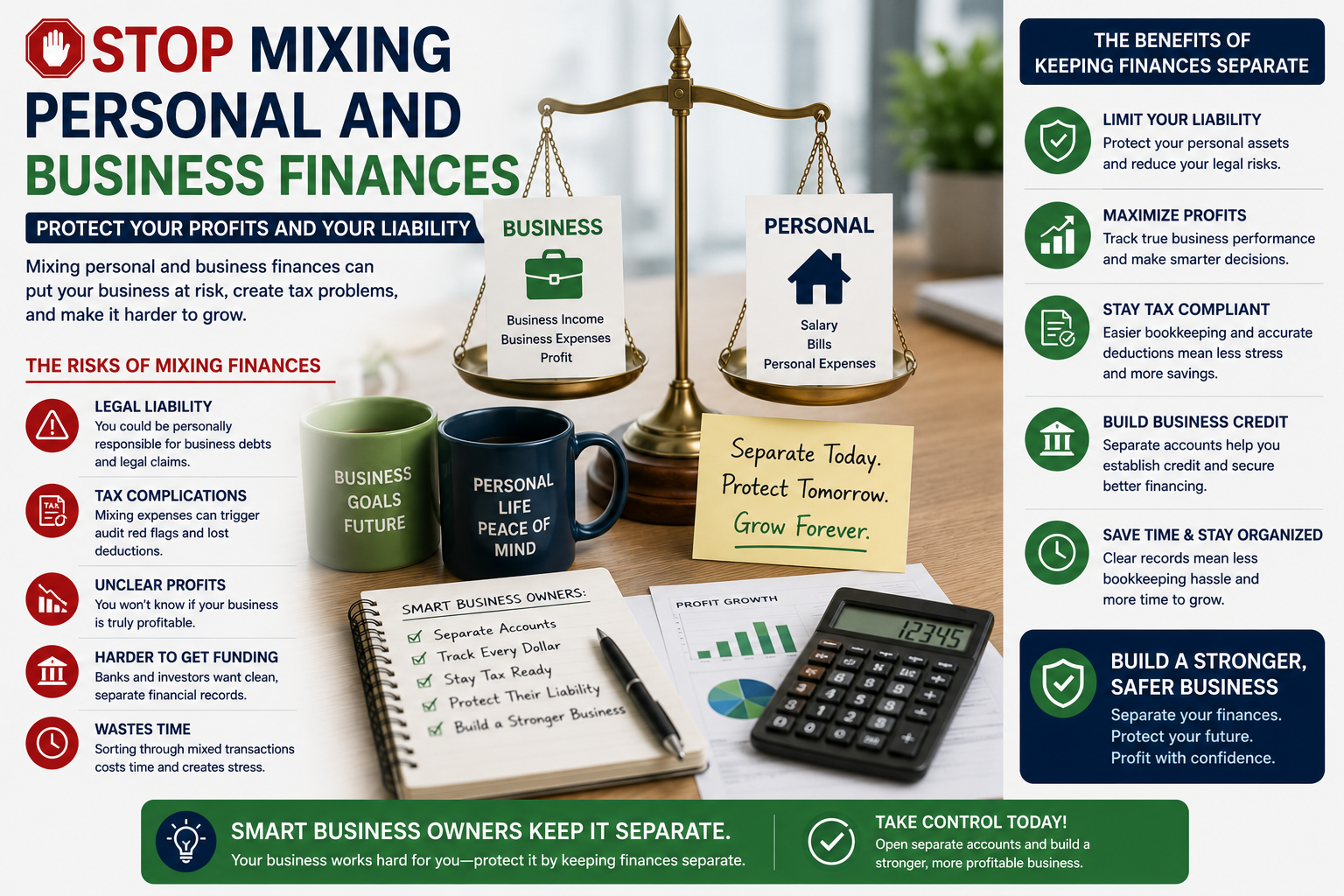
Mixing personal and business finances (also known as commingling) is one of the most common mistakes entrepreneurs make—and one of the most damaging.
In this guide, we’ll break down:
- Why this happens
- How it hurts your business
- And exactly how to fix it
The Problem: Mixing Personal and Business Finances
Mixing finances happens when business owners:
- Use personal accounts to pay business expenses
- Deposit business income into personal accounts
- Swipe business cards for personal purchases
While it may seem harmless, this creates blurred financial boundaries that quickly spiral into bigger issues.
Why Mixing Finances Hurts Your Business
1. Complicates Tax Deductions
When your finances are mixed, it becomes extremely difficult to determine what qualifies as a legitimate business expense.
- You may miss deductions you’re entitled to
- Or worse, accidentally claim personal expenses as business ones
This can lead to IRS scrutiny, audits, and penalties because unclear records make it harder to justify deductions .
👉 Bottom line: messy finances = higher taxes and more risk.
2. Creates Messy, Unreliable Records
Clean financial records are essential for:
- Understanding profitability
- Managing cash flow
- Making informed decisions
When personal and business transactions are combined:
- Bookkeeping becomes chaotic
- Financial reports become unreliable
- Strategic decisions become guesswork
Over time, this lack of clarity can hurt growth and profitability .
3. Risks Your Legal Protection (Especially for LLCs)
One of the biggest advantages of forming an LLC is limited liability protection—meaning your personal assets are protected from business debts.
But mixing finances can destroy that protection.
Courts may decide your business is not truly separate and “pierce the corporate veil,” making you personally liable for debts, lawsuits, and obligations .
That means your:
- Personal savings
- Home
- Investments
…could all be at risk.
4. Increases Audit Risk and Financial Penalties
When records are unclear:
- The IRS may disallow deductions
- You could face fines, penalties, and interest
- Audits become longer and more stressful
Even if you did nothing intentionally wrong, poor documentation can cost you thousands.
5. Damages Professional Credibility
Lenders, investors, and partners want to see organized, professional financials.
Mixed finances signal:
- Poor financial management
- Lack of structure
- Increased risk
This can make it harder to:
- Secure loans
- Attract investors
- Build business credit
How to Fix It (and Prevent It Going Forward)
The good news? This problem is completely fixable.
1. Open Separate Business Bank Accounts
Start here—this is non-negotiable.
- Create a dedicated business checking account
- Deposit all business income into it
- Pay all business expenses from it
This creates a clear financial boundary and simplifies everything.
2. Use a Business Credit Card
A business credit card helps you:
- Track expenses automatically
- Build business credit
- Maintain a clean audit trail
Avoid using personal cards for business purchases unless absolutely necessary—and always document them.
3. Pay Yourself Properly
Instead of mixing funds:
- Transfer money from your business account to your personal account
- Treat it as owner’s draw or salary
Then pay personal expenses from your personal account only.
This keeps everything clean and defensible.
4. Keep Clean, Categorized Records
Accurate bookkeeping is critical.
Make sure you:
- Categorize every transaction
- Save receipts and documentation
- Reconcile accounts regularly
Using accounting software or working with a professional can make this process seamless.
5. Document Any Overlap (If It Happens)
Sometimes overlap is unavoidable—especially in the early stages.
If it happens:
- Record the transaction clearly
- Label it as reimbursement, loan, or owner draw
- Correct it as soon as possible
The key is documentation and consistency.
Pro Tips for Long-Term Financial Clarity
- Set clear financial policies for your business
- Review your books monthly
- Avoid “shortcuts” that blur financial lines
- Work with a bookkeeper or accountant as you grow
Final Thoughts
Mixing personal and business finances might seem like a small convenience—but it can lead to:
- Lost tax savings
- Legal exposure
- Financial confusion
- Costly penalties
On the flip side, separating your finances gives you:
- Clean records
- Strong legal protection
- Better decision-making
- A more professional, scalable business
If you want to build a serious business, treat your finances seriously from day one.