
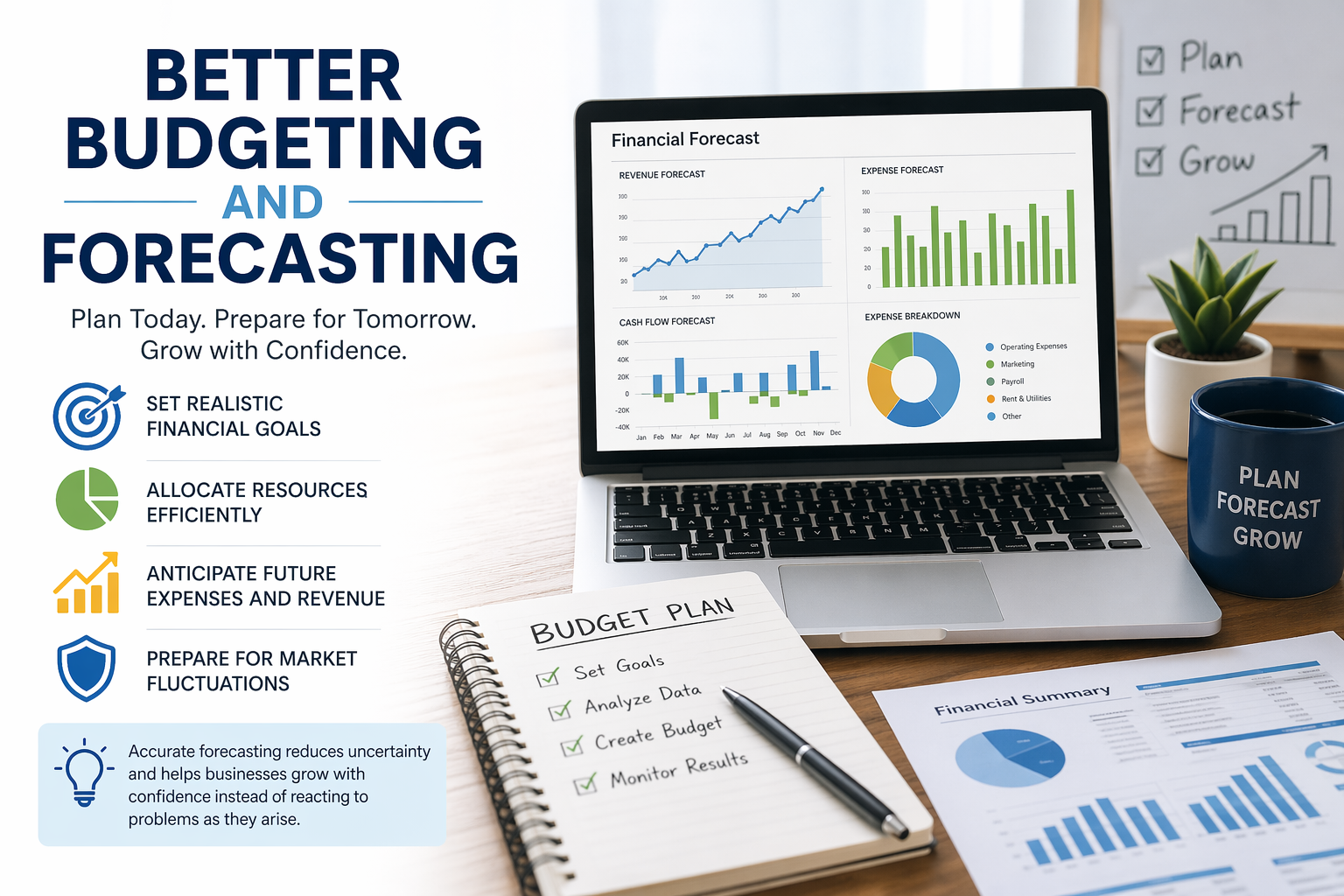
In today’s fast-moving business environment, success rarely comes from guesswork. It comes from planning, precision, and proactive decision-making. That’s where budgeting and forecasting play a critical role. As core components of financial management, they give businesses the clarity and control needed to grow strategically—not reactively.
Whether you’re a startup, small business, or scaling company, mastering budgeting and forecasting can be the difference between surviving and thriving.
What Is Budgeting and Forecasting?
Budgeting is the process of creating a financial plan for a specific period—typically annually. It outlines expected income, expenses, and resource allocation.
Forecasting, on the other hand, is the ongoing process of predicting future financial outcomes based on current data, trends, and market conditions.
Together, they form a powerful system that helps businesses stay aligned with their goals while adapting to change.
Why Better Budgeting and Forecasting Matter
1. Set Realistic Financial Goals
One of the biggest advantages of effective budgeting is the ability to set achievable, data-driven goals.
Instead of relying on assumptions, businesses can:
- Analyze historical performance
- Evaluate current market conditions
- Align financial targets with operational capacity
This leads to goals that are ambitious—but attainable—helping teams stay motivated and focused.
2. Allocate Resources Efficiently
Resources—time, money, and talent—are limited. Budgeting ensures they are used wisely.
With a clear financial plan, you can:
- Prioritize high-impact initiatives
- Control unnecessary spending
- Invest in areas that drive growth
Efficient allocation reduces waste and maximizes return on investment (ROI).
3. Anticipate Future Expenses and Revenue
Forecasting allows businesses to look ahead and prepare for what’s coming.
By analyzing trends and patterns, you can:
- Predict seasonal fluctuations
- Plan for upcoming expenses
- Estimate future revenue streams
This forward-looking approach prevents surprises and keeps your business financially stable.
4. Prepare for Market Fluctuations
No market is completely predictable. Economic shifts, industry disruptions, and unexpected events can impact your business at any time.
With strong forecasting, you can:
- Model best-case, worst-case, and expected scenarios
- Build contingency plans
- Adjust strategies quickly when conditions change
This flexibility gives your business resilience in uncertain times.
5. Improve Decision-Making
When you have accurate financial data and projections, decision-making becomes clearer and more strategic.
Instead of reacting under pressure, you can:
- Evaluate risks with confidence
- Compare different financial scenarios
- Make informed investment decisions
Better data leads to better decisions—and better outcomes.
6. Strengthen Cash Flow Management
Cash flow is the lifeblood of any business. Poor planning can lead to shortages, even when revenue is strong.
Budgeting and forecasting help you:
- Identify potential cash gaps in advance
- Plan for large expenses
- Maintain healthy operating reserves
This ensures your business can meet its obligations and continue operating smoothly.
7. Reduce Uncertainty and Increase Confidence
Perhaps the most important benefit is peace of mind.
When you know where your business is headed financially, you:
- Operate with greater confidence
- Reduce stress and uncertainty
- Focus on growth instead of firefighting
Accurate forecasting transforms uncertainty into opportunity.
Best Practices for Effective Budgeting and Forecasting
To get the most out of your financial planning, follow these proven strategies:
Use Real Data
Base your budgets and forecasts on actual financial data—not assumptions.
Review Regularly
Update forecasts monthly or quarterly to reflect changing conditions.
Involve Key Stakeholders
Collaborate with department leaders to ensure accuracy and accountability.
Build Multiple Scenarios
Prepare for different outcomes (best case, worst case, expected case).
Leverage Technology
Use accounting and forecasting tools like QuickBooks, Xero, or forecasting software to streamline the process.
Common Mistakes to Avoid
Even well-intentioned businesses can fall into these traps:
- Overly optimistic projections
- Ignoring historical data
- Failing to update forecasts regularly
- Underestimating expenses
- Not planning for contingencies
Avoiding these mistakes can significantly improve the accuracy and usefulness of your financial plans.
How Better Budgeting Drives Long-Term Growth
When budgeting and forecasting are done right, they don’t just help you manage money—they help you build a roadmap for sustainable growth.
You gain:
- Clear financial direction
- Stronger operational control
- Increased profitability
- Greater resilience in changing markets
Instead of reacting to problems as they arise, your business operates with intention and foresight.
Final Thoughts
Better budgeting and forecasting are not just financial exercises—they are strategic tools that empower smarter decision-making and long-term success.
By planning ahead, allocating resources wisely, and anticipating future challenges, your business can move forward with clarity and confidence.
If you’re looking to improve your financial management, investing time and effort into budgeting and forecasting is one of the most impactful steps you can take.
