
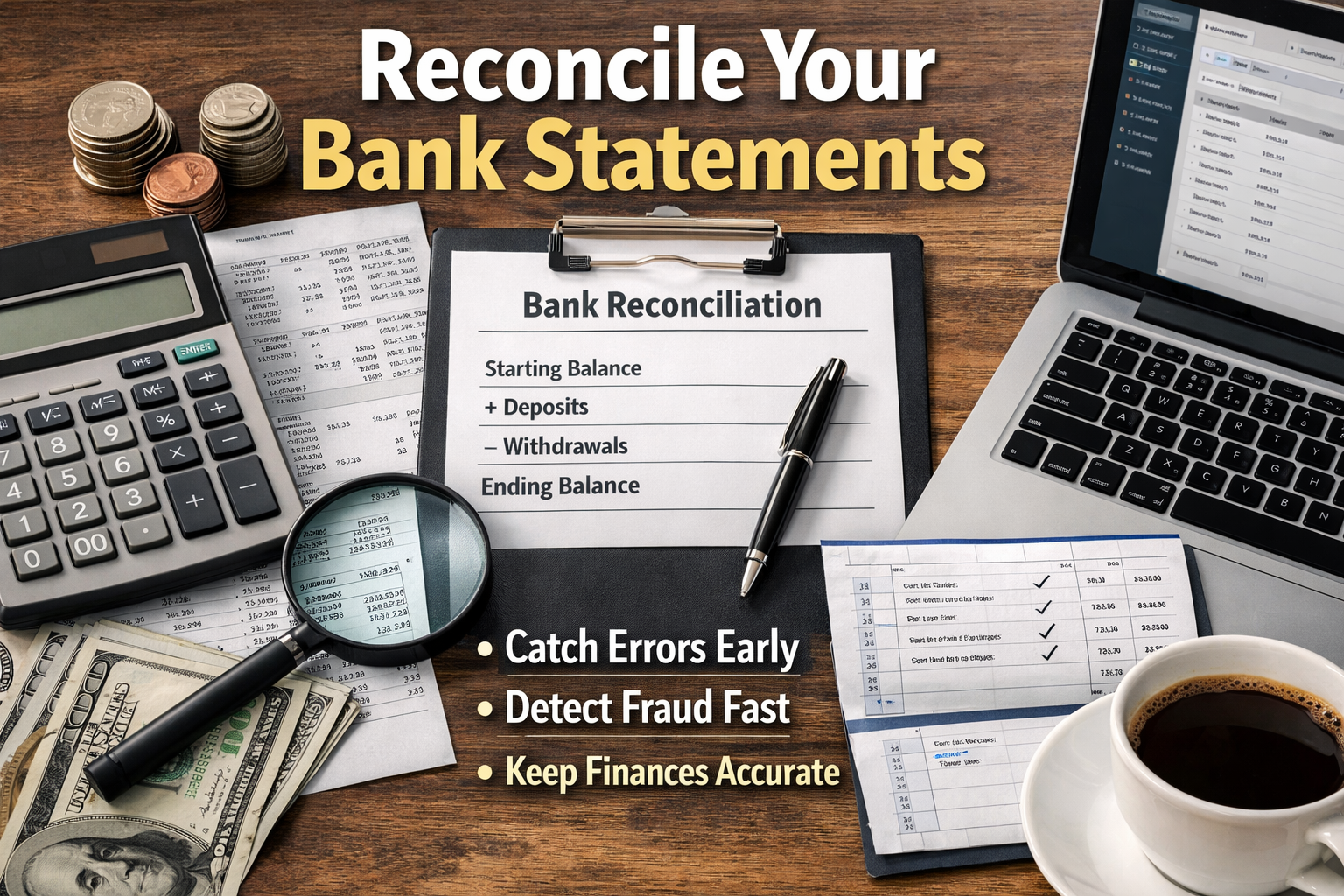

What Does It Mean to Reconcile Your Bank Statements?
Reconciling your bank statements means comparing your internal financial records—such as your accounting software, spreadsheets, or checkbook—with your bank’s official records. The goal is simple: ensure that both balances match and all transactions are accounted for.
This process helps identify discrepancies like missing transactions, duplicate entries, or unauthorized charges.
Why Bank Reconciliation Matters
Regular bank reconciliation isn’t just a bookkeeping task—it’s a critical financial control. Whether you’re managing personal finances or running a business, staying aligned with your bank records ensures clarity, accuracy, and security.
Key Benefits of Reconciling Your Bank Statements
1. Catch Errors Early
Mistakes happen—both on your end and your bank’s. These can include:
- Duplicate charges
- Incorrect transaction amounts
- Missing deposits
By reconciling regularly, you can spot and correct these issues before they snowball into bigger problems.
2. Detect Fraud or Unauthorized Transactions
One of the most important benefits of reconciliation is fraud detection.
If there’s any suspicious activity—such as:
- Unknown withdrawals
- Unauthorized card charges
- Strange transfers
—you’ll catch it quickly and can take immediate action, such as contacting your bank or freezing your account.
3. Maintain Accurate Financial Reports
Accurate records are the foundation of sound financial decision-making.
When your books match your bank statements:
- Your financial reports are reliable
- Budgeting becomes more precise
- Tax preparation is easier and less stressful
For businesses, this is especially critical for audits, investor reporting, and compliance.
4. Improve Cash Flow Management
Reconciling helps you understand your true available balance, not just what you think you have.
This prevents:
- Overdraft fees
- Missed payments
- Poor financial planning
5. Build Better Financial Discipline
Consistency in reconciliation builds strong financial habits. Over time, it leads to:
- Better organization
- Increased financial awareness
- Greater control over spending and saving
How Often Should You Reconcile?
The ideal frequency depends on your transaction volume:
- Monthly: Best for individuals or low-activity accounts
- Weekly: Recommended for small businesses
- Daily: Ideal for high-volume or cash-intensive operations
👉 The key is consistency—make reconciliation a routine habit.
Step-by-Step: How to Reconcile Your Bank Statements
- Gather your records
- Bank statement
- Internal ledger or accounting software
- Compare starting balances
Ensure both records begin with the same amount. - Match transactions
Tick off deposits, withdrawals, and payments one by one. - Identify discrepancies
Look for missing or incorrect entries. - Adjust your records
Update your books to reflect accurate information. - Confirm final balance
Both balances should match after adjustments.
Common Mistakes to Avoid
- Skipping reconciliation for months
- Ignoring small discrepancies
- Not recording transactions promptly
- Relying solely on bank balances without internal tracking
Pro Tips for Easier Reconciliation
- Use accounting software like QuickBooks, Xero, or Wave
- Automate transaction imports
- Set calendar reminders
- Keep digital copies of receipts and invoices
Final Thoughts
Regularly reconciling your bank statements is one of the simplest yet most powerful financial habits you can build. It protects you from errors, safeguards against fraud, and ensures your financial records are always accurate.
Whether you’re managing personal finances or running a business, a few minutes of reconciliation each week or month can save you hours—and money—down the line.